
Transforming emotional reporting into structured, decision-ready signal
Integrity Intake Platform
ROLE + COMPANY + YEAR
Lead Product Designer, GoFundMe 2026
DELIVERABLES
Task Flows, Screen Flows, & Prototyping
AI
Co-pilot across research, synthesis, and iteration
PLATFORM + FRAMEWORK
www.gofundme.com / Heart DS
Context
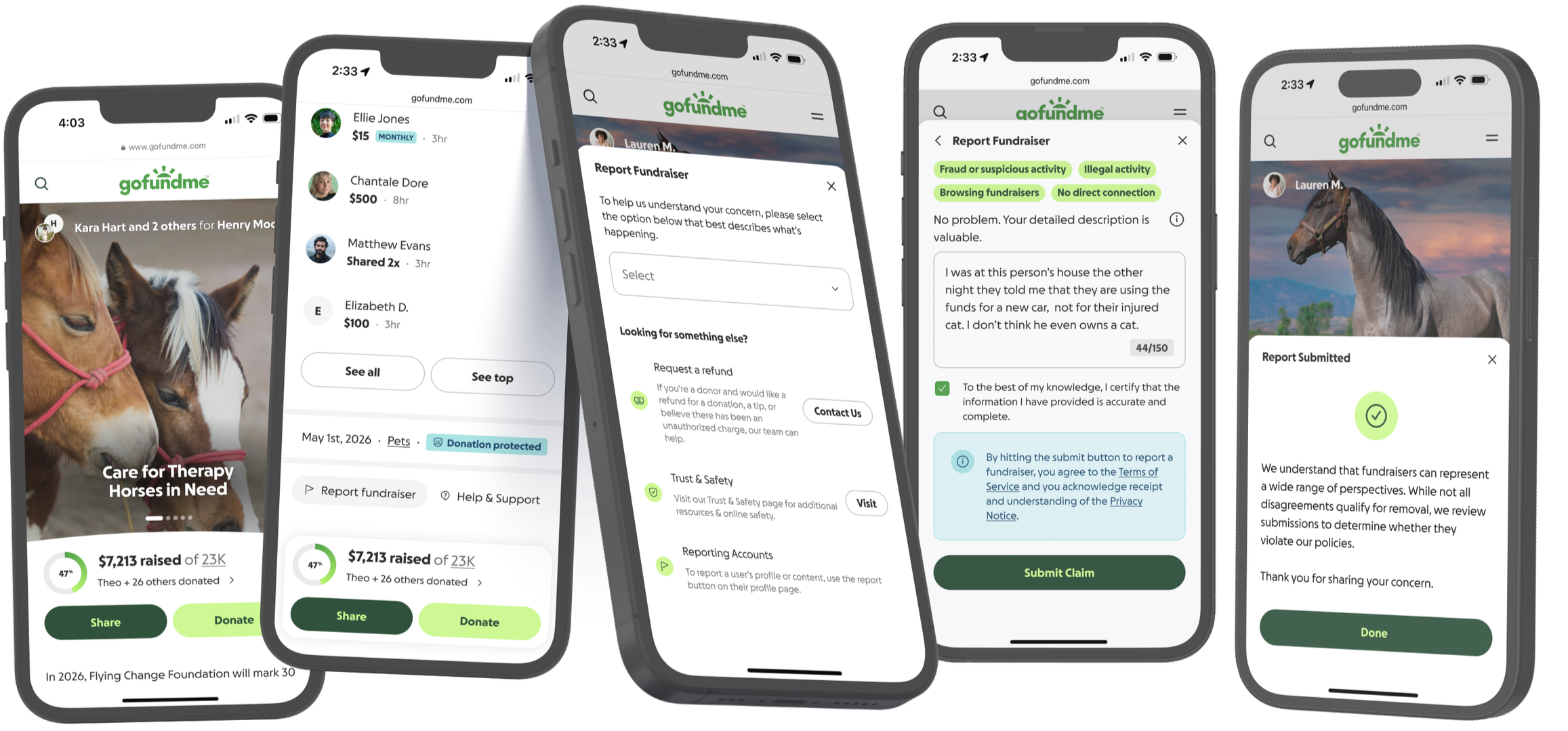
GoFundMe’s reporting system allows users to submit free-form concerns about fundraisers and accounts. While well-intentioned, reports often arrive as emotional narratives, personal disputes, or loosely defined complaints without clear policy alignment. This requires manual interpretation by compliance teams across fragmented tools.
Problem Space
The current reporting ecosystem is fragmented across multiple entry points and supported by static, non-adaptive forms. The experience lacks intent based structure leading to emotionally reactive, low signal submission that are often misaligned with policy criteria and moderation workflows.
This results in inconsistent journeys, duplicated workflows, and routing inefficiencies forcing consumers to self navigate complex pathways before receiving support or voicing concerns.
Measuring Impact
+80%
faster identification of violations
+50%
improvement in moderation accuracy
+90%
increase in policy aligned submissions
Research Insights
Low discoverability
Static forms
Emotional narratives & personal disputes
Fragmented inputs across disconnected tools
38%
misrouted reports requiring manual reassignment
27%
refund requests mis-categorized as fraud
31%
incomplete submissions requiring follow-up
18%
low-signal noise from disagreement-based reports
◎ Goal
Transform reactive, text-heavy complaints into structured, policy-aligned signal.
Design a unified, low-friction reporting system that improves signal quality, routing precision, and moderation accuracy.
System Tensions
Balancing community voice and platform integrity
Community Advocacy
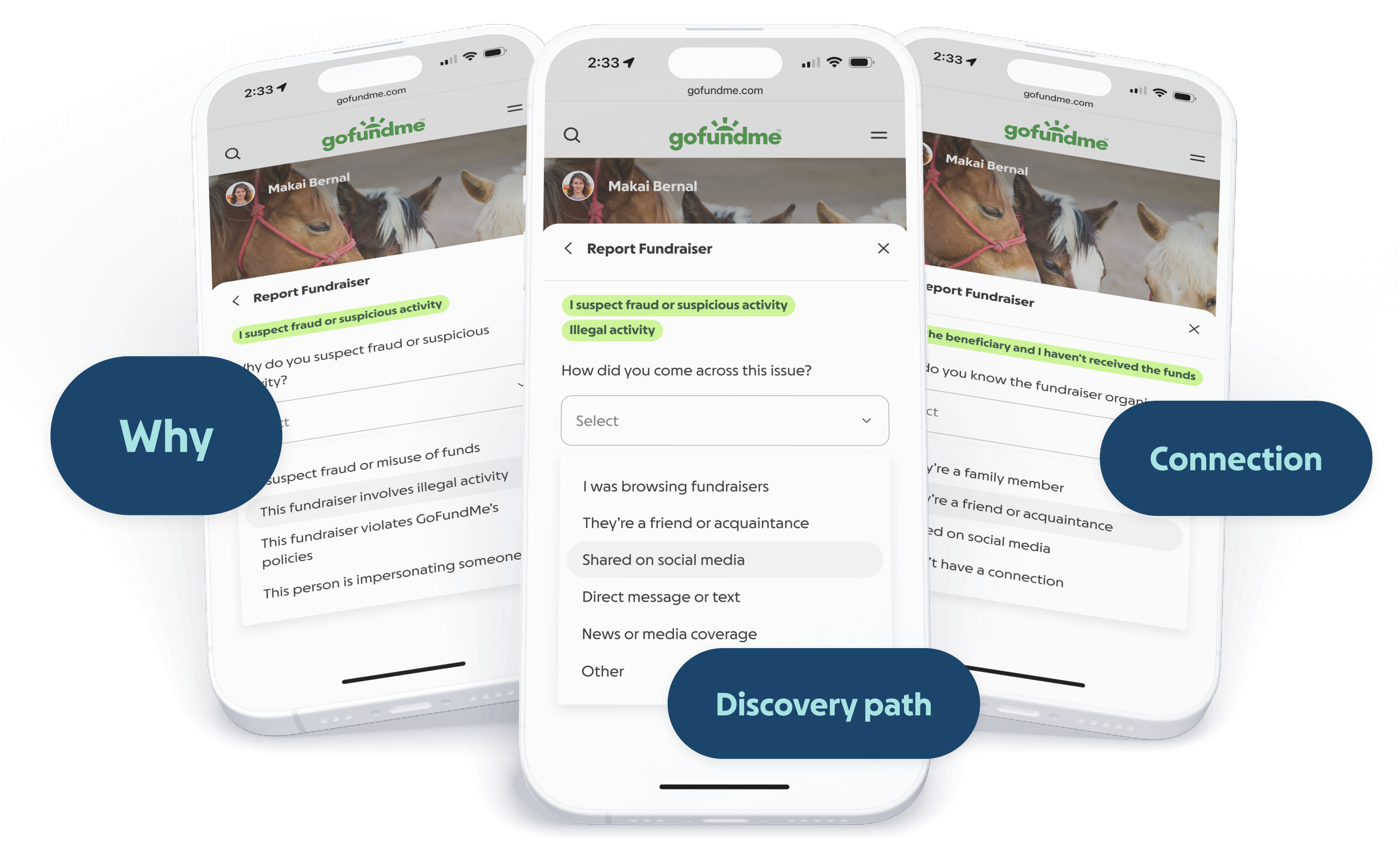
How might we guide users toward actions aligned with their intent while preserving their voice?
Policy Governance
How might we structure input to produce higher quality signal and faster decisions?
Platform Integrity
How might we improve routing precision and clarity across the system?
Design Principles
⚪️
Reduce Noise, Increase Signal
Clear pathways reduce reactive behavior and improves submission quality, routing accuracy, and operational efficiency.
⚪️
Guide, Don’t Police
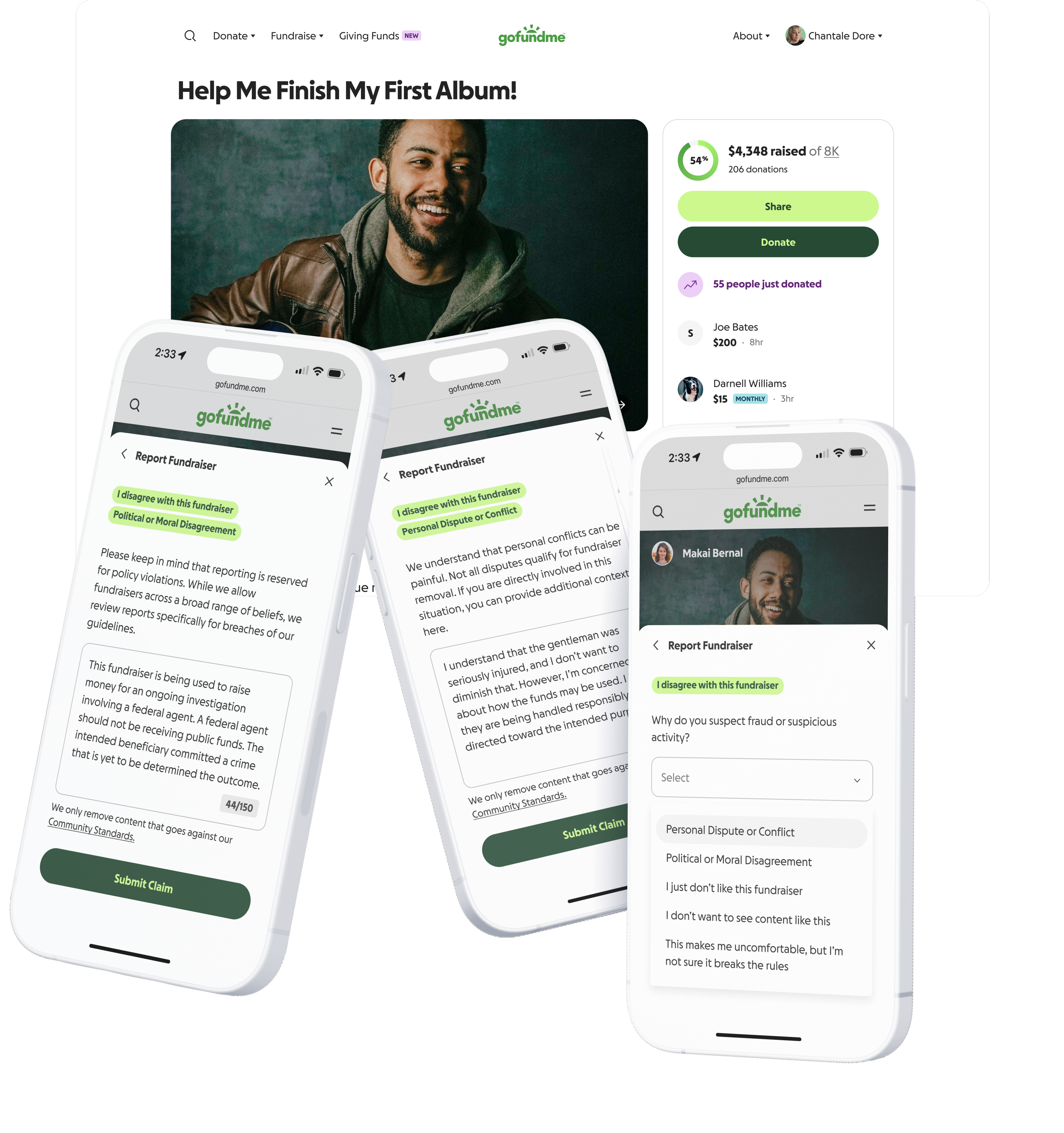
Use framing, selection design, and evidence prompts to gently steer users toward policy-aligned actions rather than blocking them outright.
⚪️
Discoverability
Surface relevant guidance and alternative pathways at the point of friction to reduce false positives and better route issues before escalation.
Signal Transformation System
Converting emotion into structured, policy-aligned signal
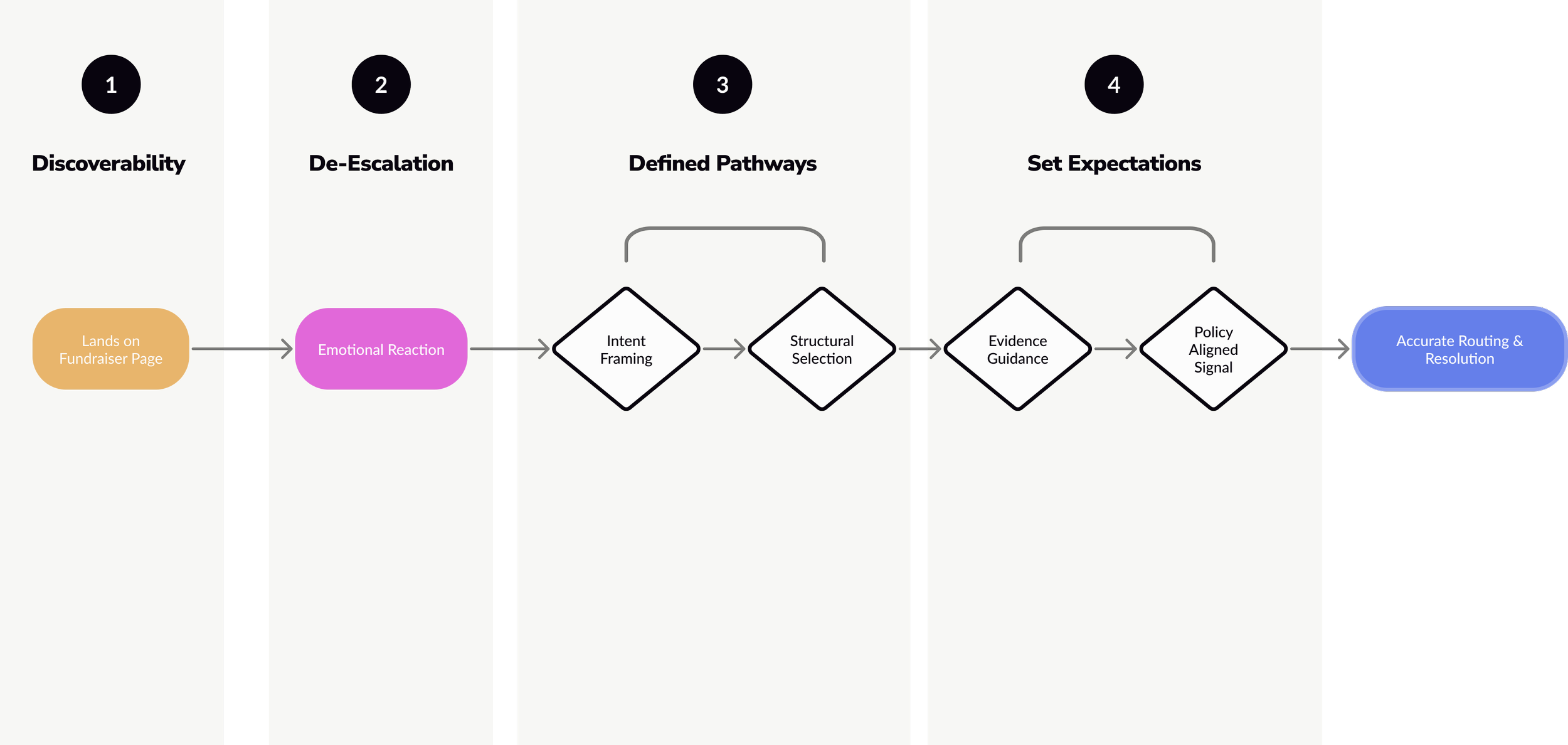
By unifying fragmented entry points and structuring user intent, the system transforms unstructured reporting into actionable input aligned with moderation workflows.
User Scenarios
End to end product experience for various logged in personas.
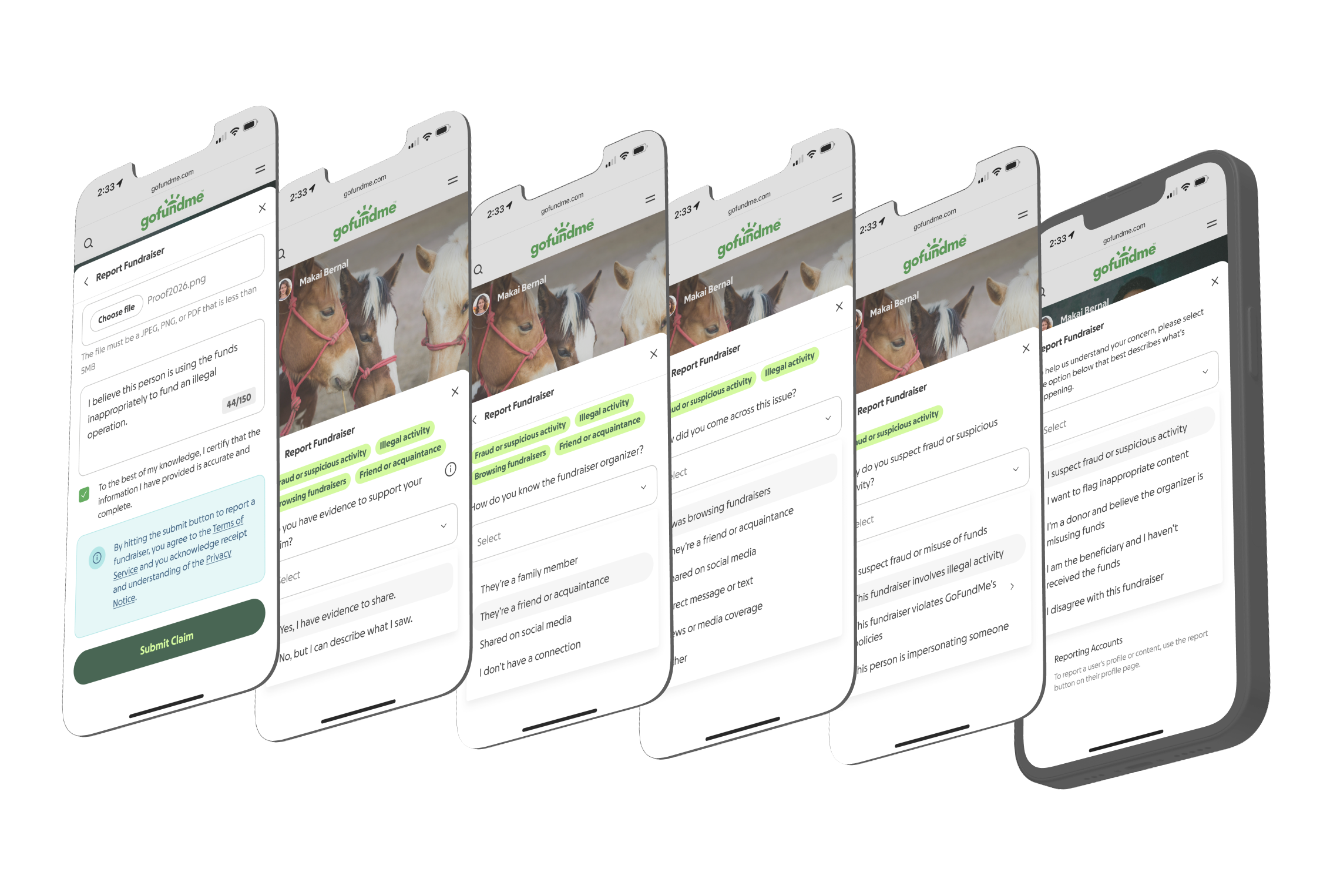
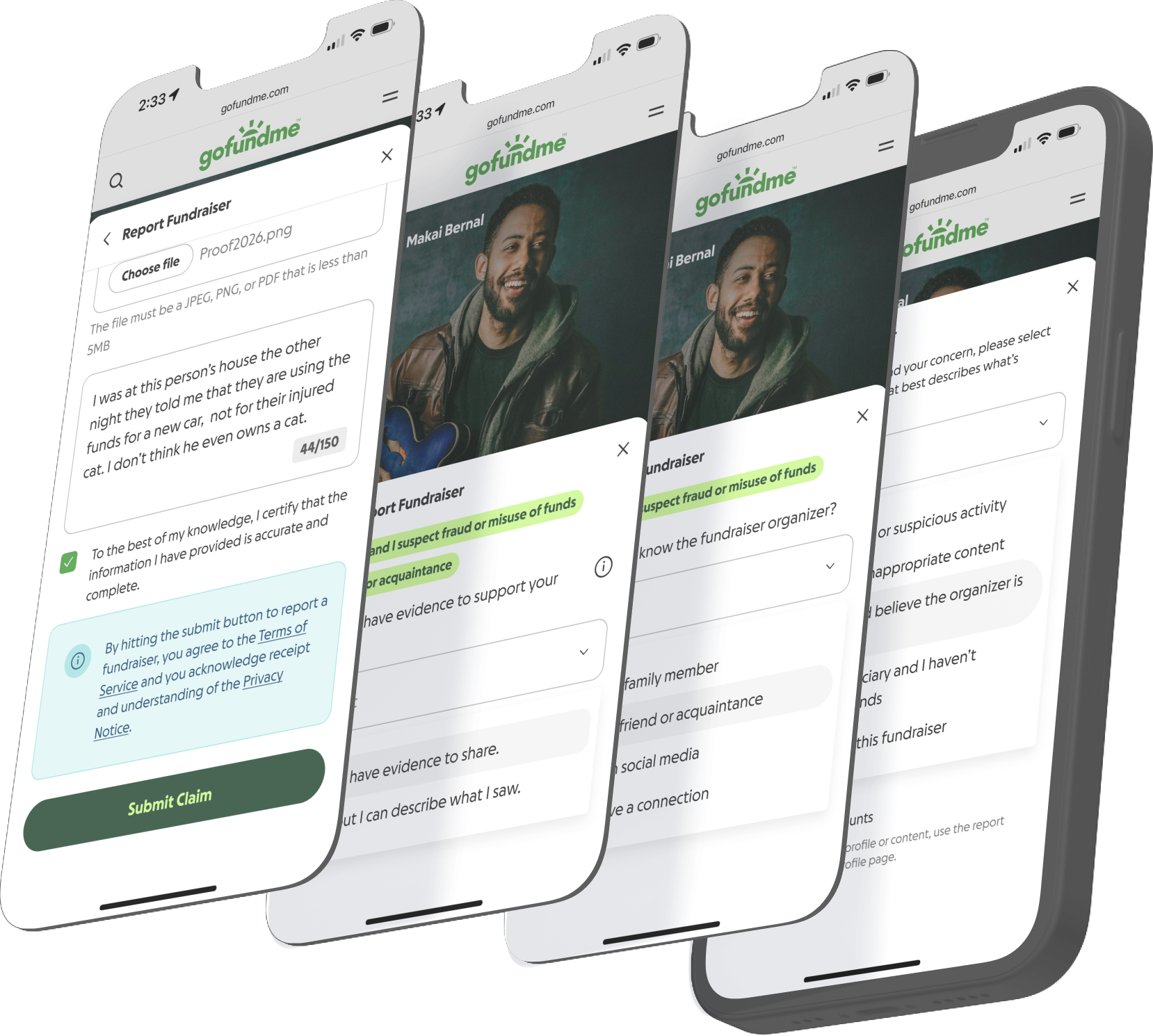
Navigates concern-driven reporting with reassurance-focused feedback
→ 6 steps · 2-3 min
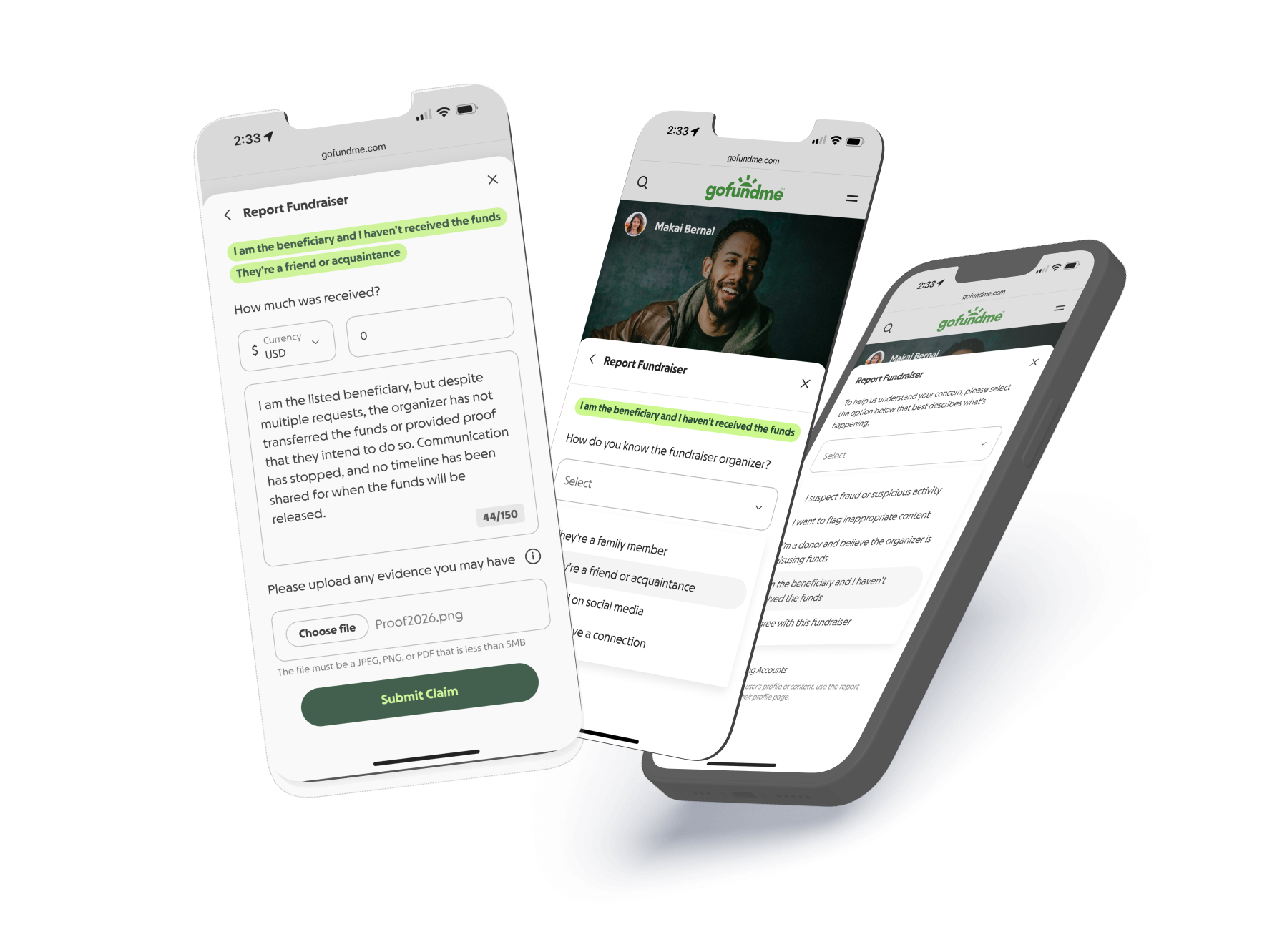
Seeks resolution through structured refund or fraud pathways
→ 4 steps · 1-2 min
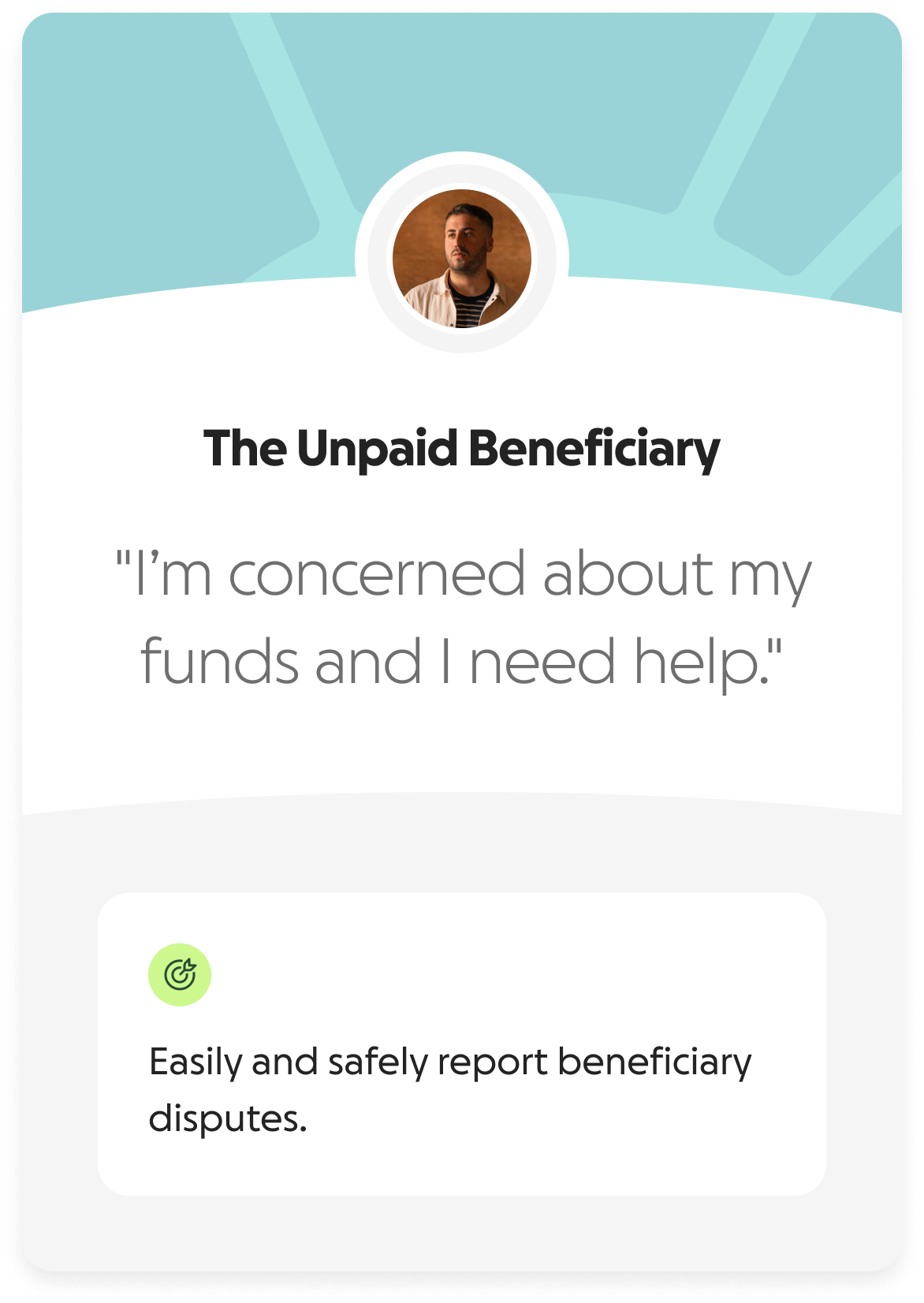
Reports financial concerns with minimal friction
→ 3 steps · 1-2 min
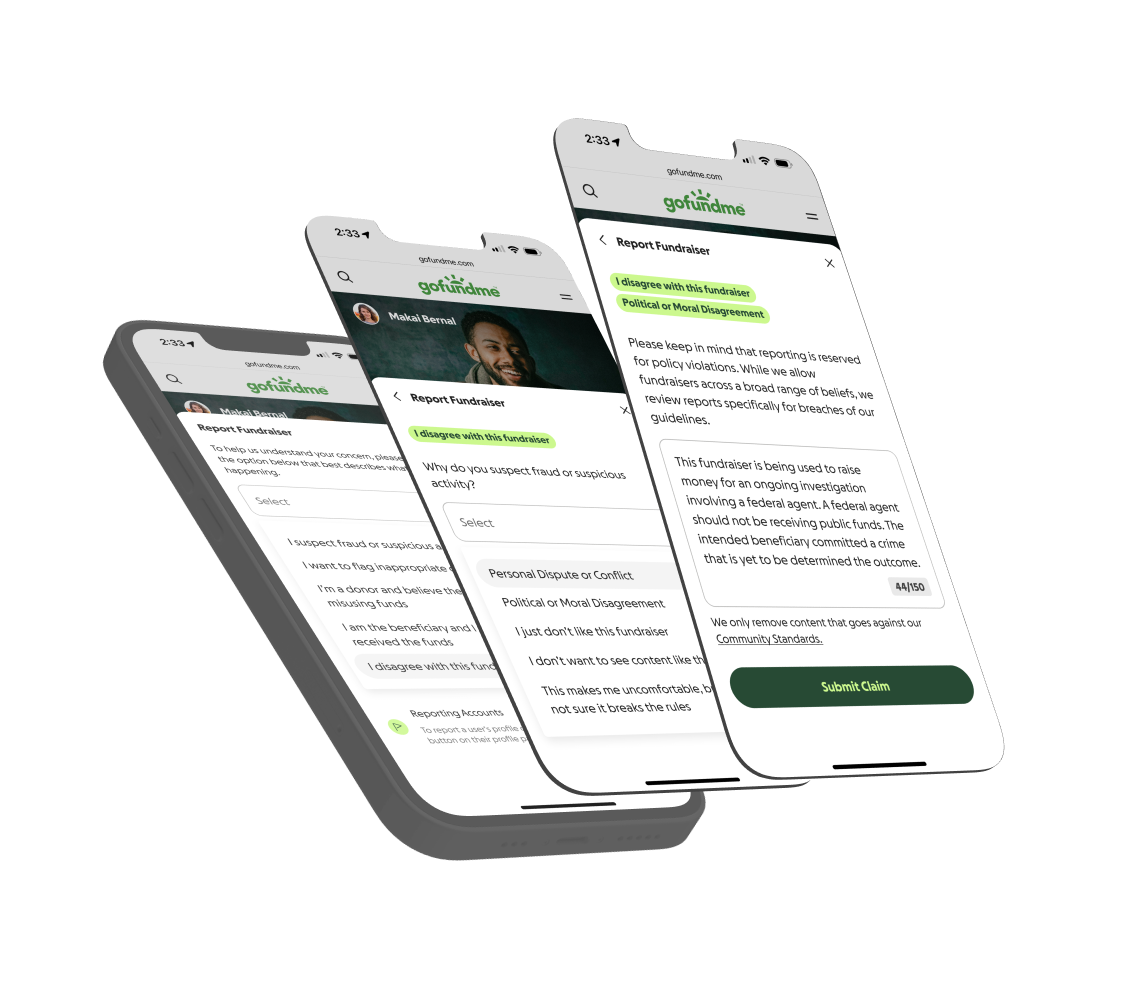
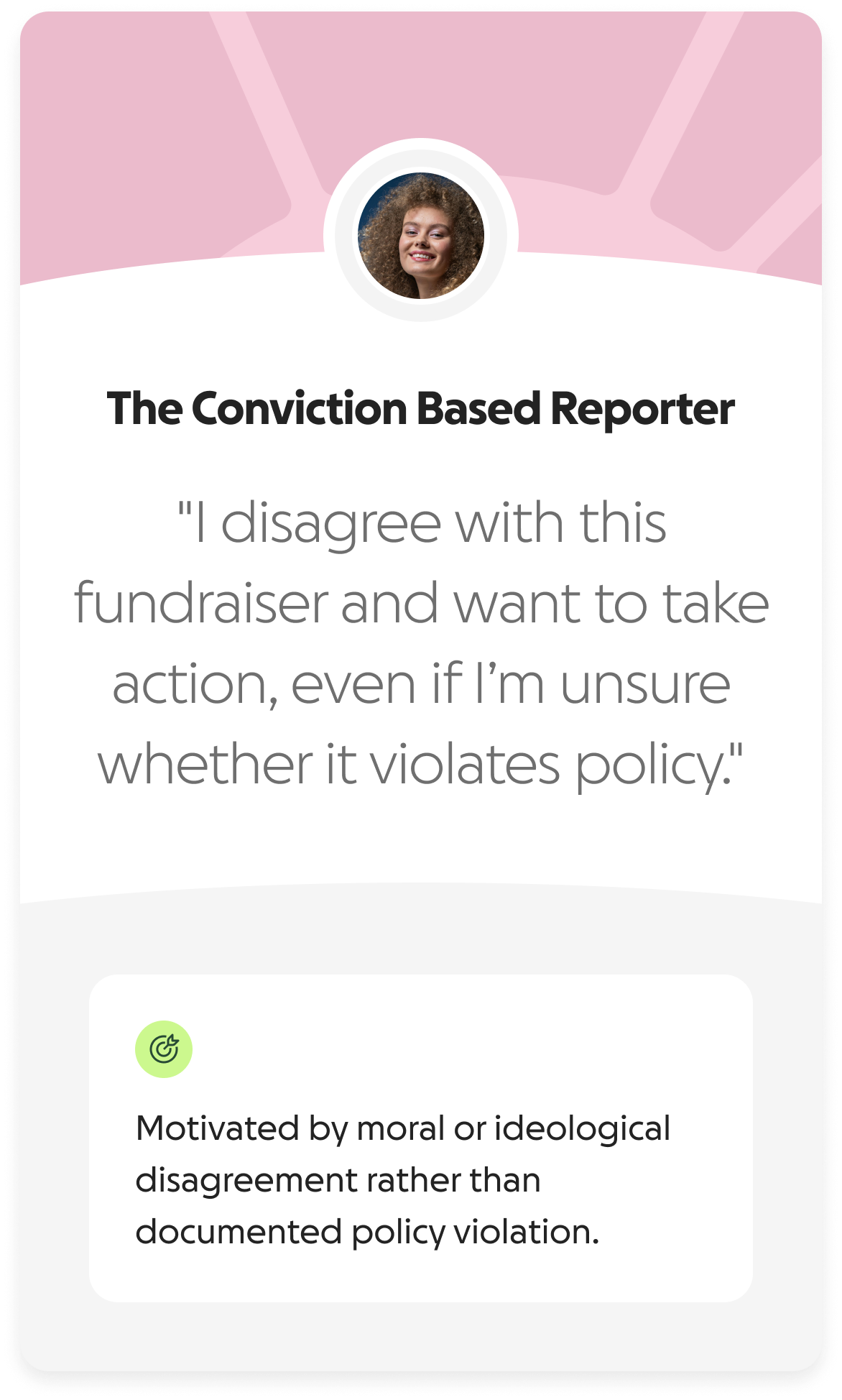
Submits high-confidence claims aligned to policy pathways
→ 3 steps · 1-2 min
Design for Intent
This section outlines the key design decisions that shaped the reporting experience.
1 / Discoverability
Surface guidance and alternative pathways at the point of friction to reduce false positives and improve routing.
In page nudges
Dynamic logic
Alternative pathways
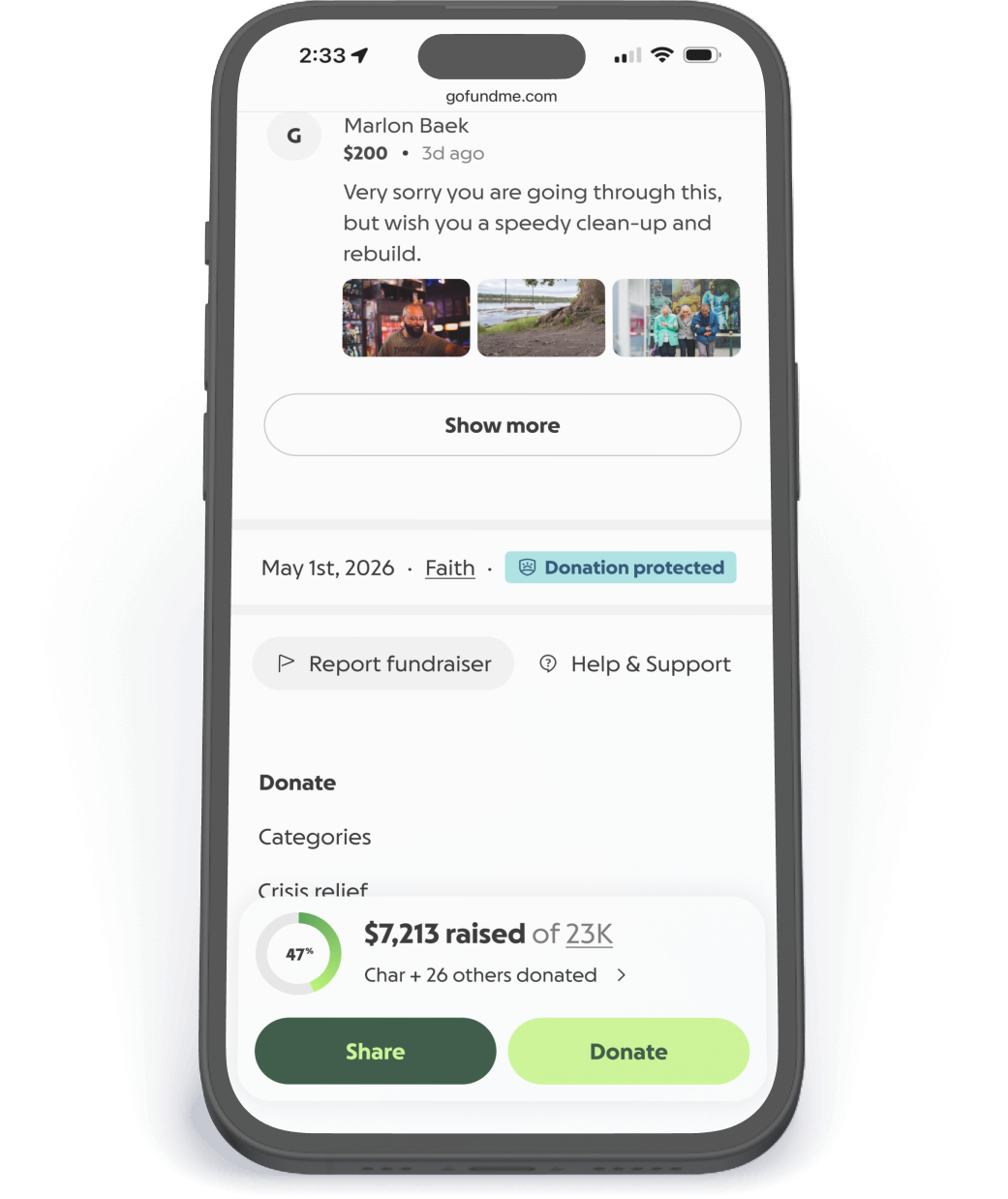
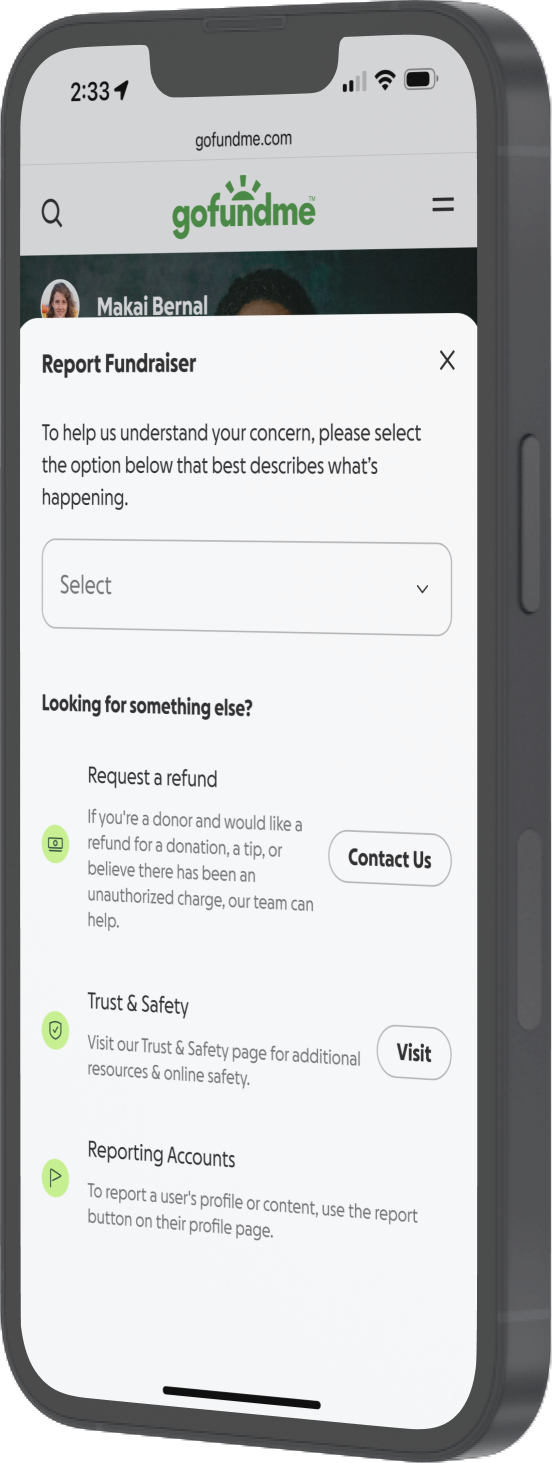
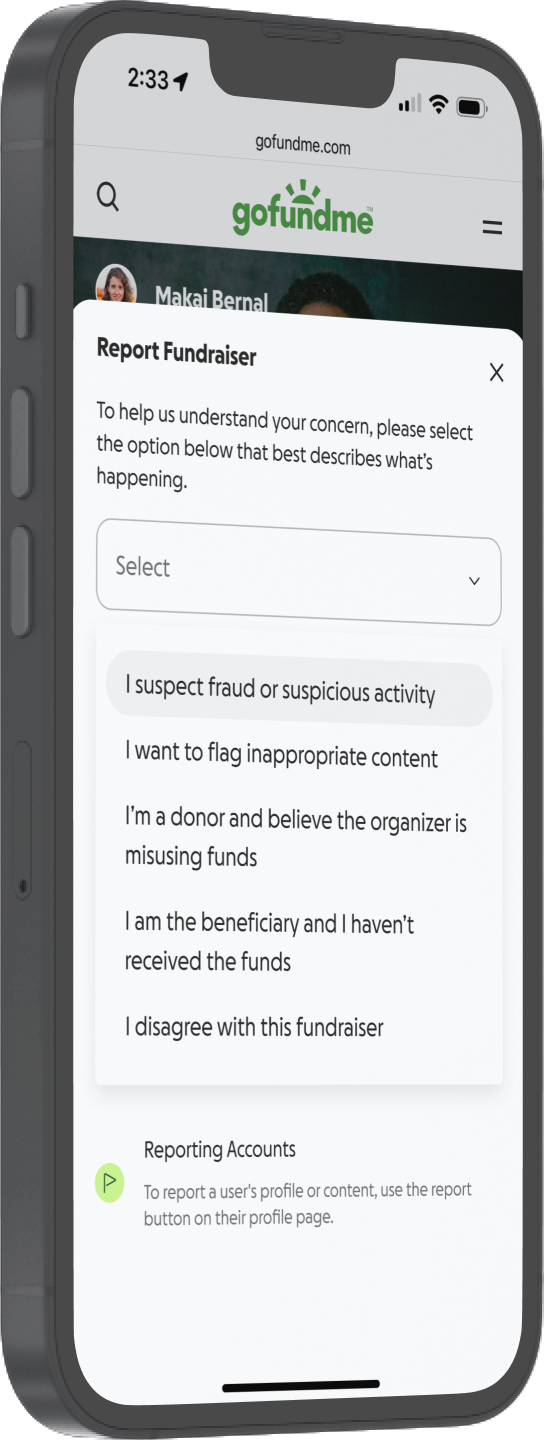
Unified entry point for varied community concerns
Concerned supporters
Fraud reporters
Refund seekers
Beneficiaries owed funds
People who simply disagree
Safety teams reviewing cases
Ops teams routing issues
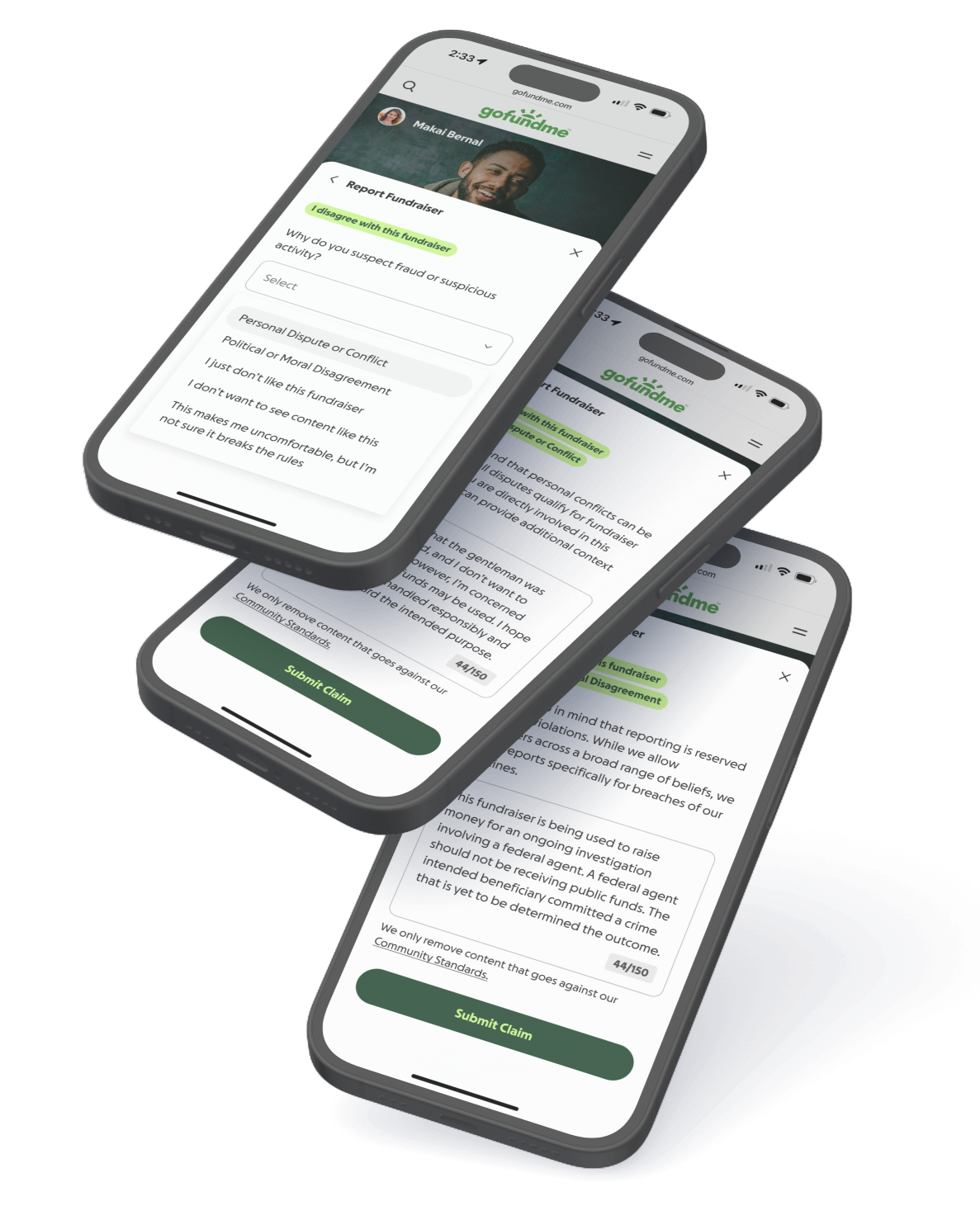
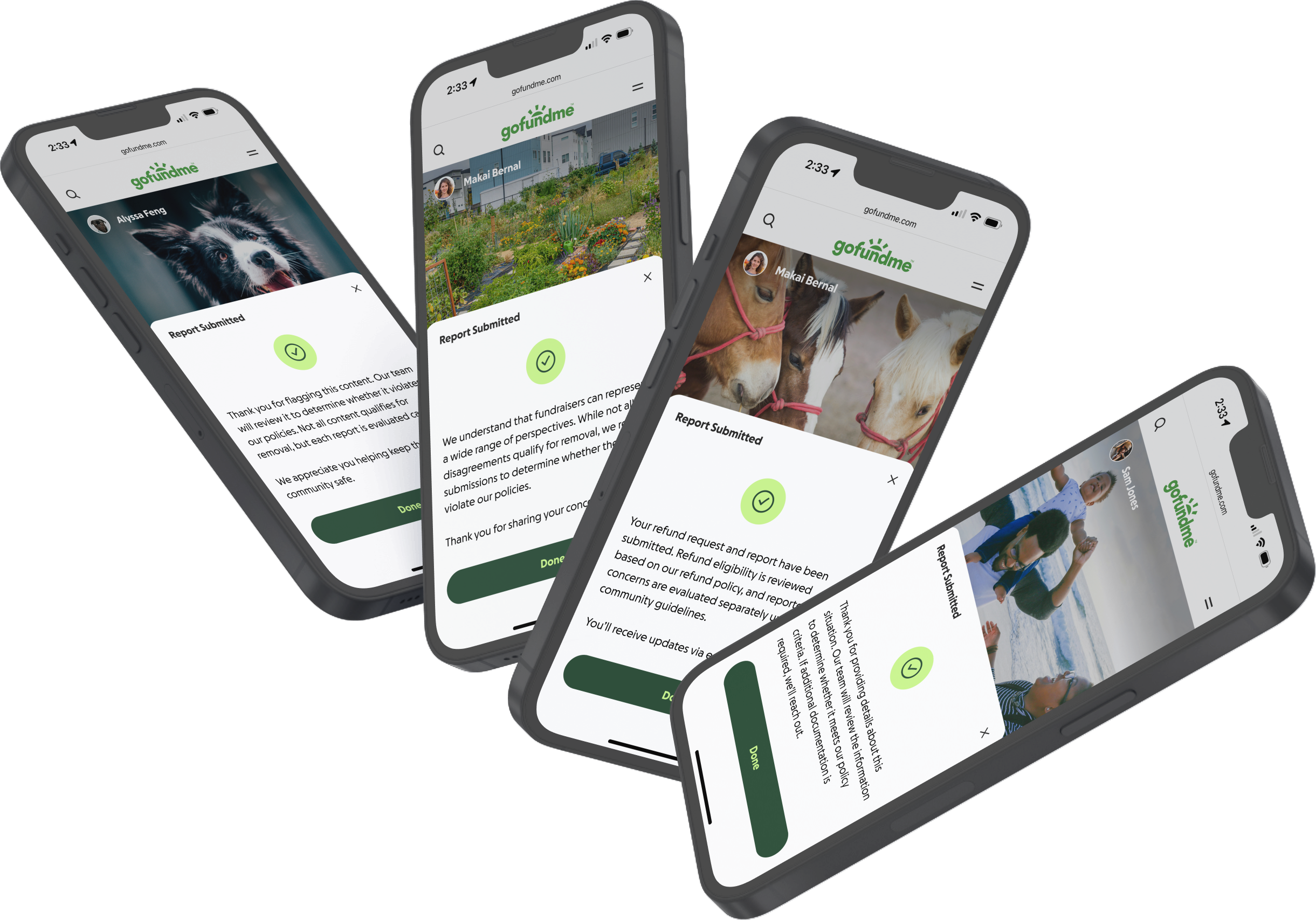
2 / Emotional De-escalation
Convert reactive reporting into structured signal through framing, intent selection, and evidence guidance.
Providing clear pathways and a controlled outlet for context reduces low-signal submissions and minimizes unsupported claims.
Guide users through pathways that respect their perspective while aligning with policy criteria.
3 / Intent Framing + Structured Selection
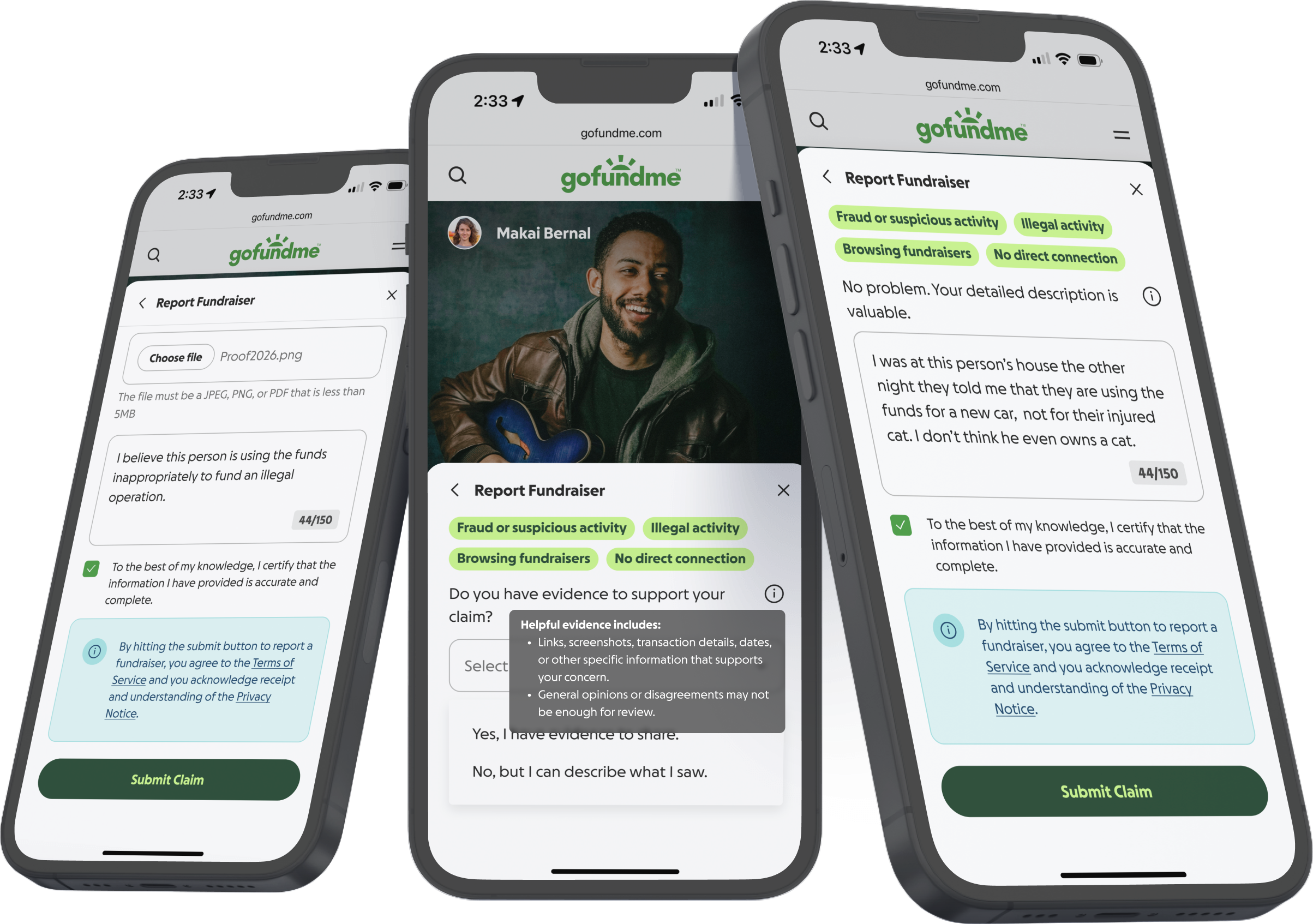
Replace open-ended input with defined pathways aligned to policy, user behavior, and moderation workflows.
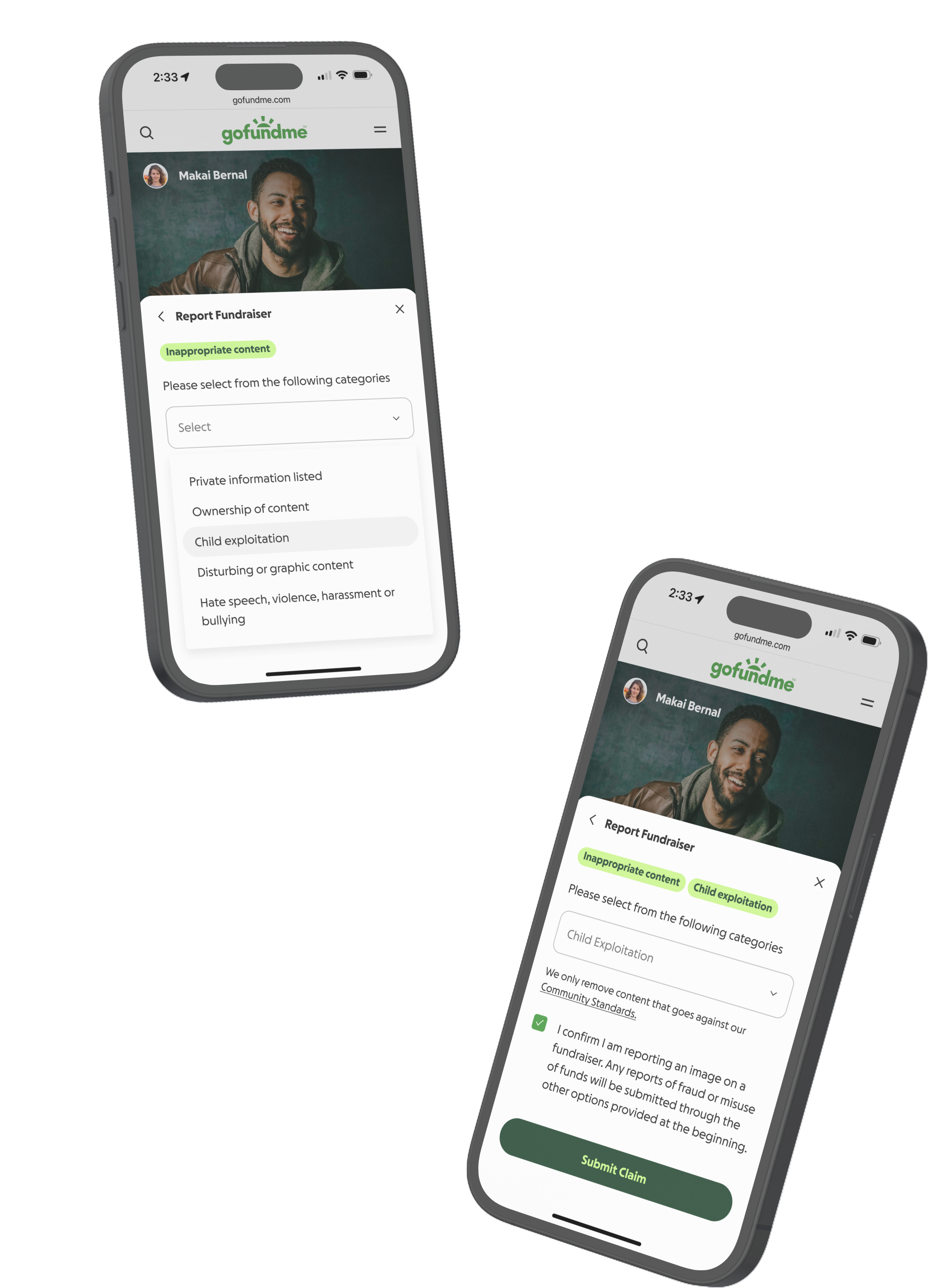
4 / Evidence Guidance + Policy Aligned Signal
Set clear expectations and provide tooltips to capture actionable input & improve moderation efficiency and reduce follow-ups.
Evidence prompts
Contextual help links
Policy qualification messaging
System Intelligence
Converts unstructured user input into structured signal
Aligns user intent with policy and moderation workflows
Enables faster, more consistent decision-making
Creates a foundation for future AI-assisted triage
Summary
Designed a system that transforms emotionally driven reporting into structured, policy-aligned signal. Improved signal quality, reduced operational noise, and strengthened platform trust through intent-based pathways and guided input.
Next, we will validate with power users, stress-test content against backend and legal constraints, and align the workflow to a unified support model.